Data rooms according to European values: an anchor of trust for smart living
4. March 2025
Reading time:
4 minutes
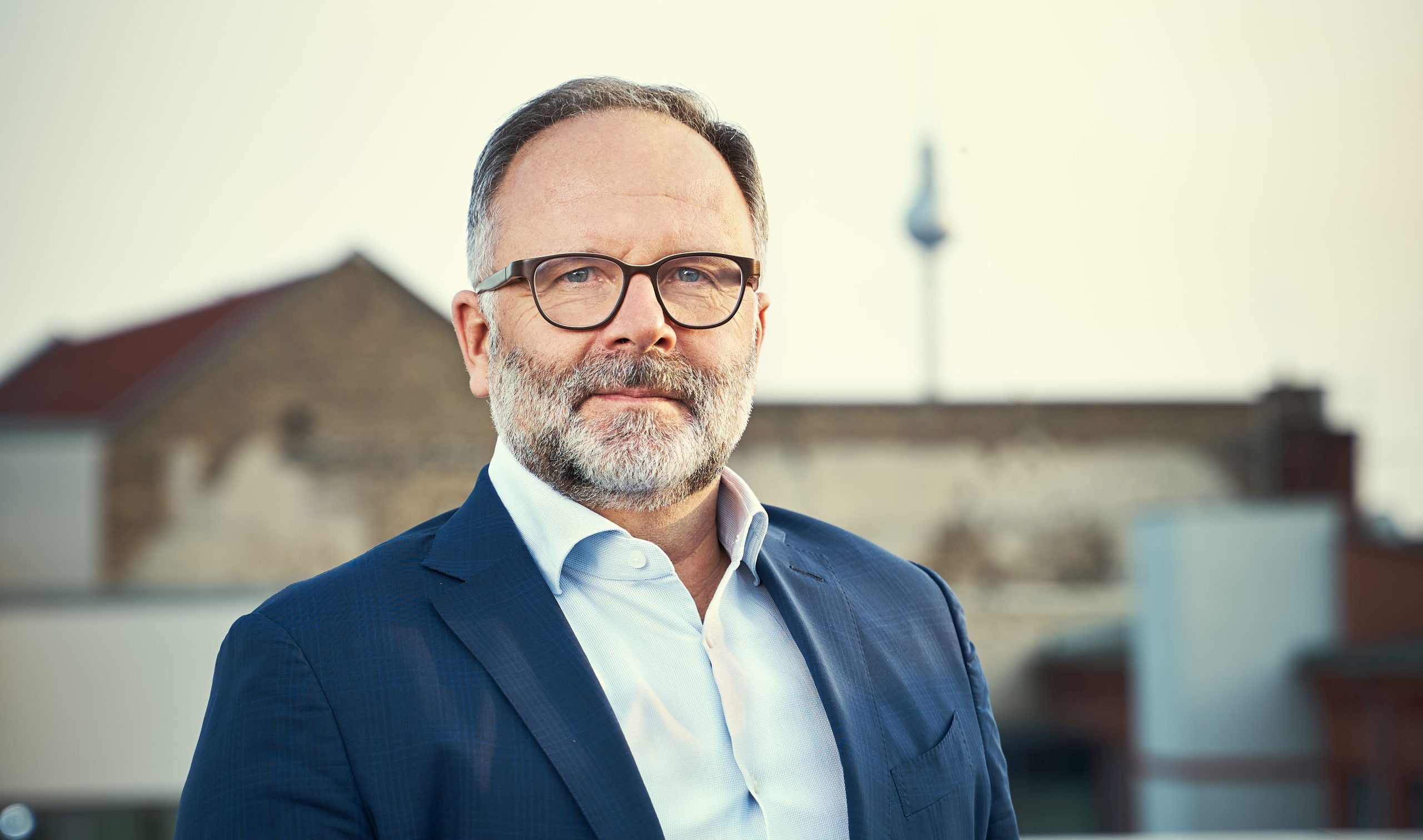
Gira is one of the leading full-service providers of intelligent system solutions for electromechanical and networked digital building control. We talk to the Head of Digital Platforms, Dr. Stefan Pees, about the future market of smart living and the motivation for participating in SmartLivingNEXT.

Dr Pees, what technological strategies is your company pursuing to drive digitalization in the building sector?
We monitor technological developments and examine their potential applications both internally and externally to improve products and solutions for our customers. The use and exchange of data with partners in the distribution channel is a good example of this. Metadata on our products is playing an increasingly important role in the planning and installation of conventional and, in particular, smart building technology installations. What’s more, this data is also becoming increasingly important over the life cycle of the building in terms of maintenance and refurbishment. Digitalization can greatly reduce the amount of work required on site in the building.
The value of data that can be generated from buildings and living environments has now been recognized. What do you think still receives too little attention when people talk about smart living as a future market?
A market grows with the benefits offered to a customer group. Technologies and technical possibilities have an inspiring effect on the creation of new offers. It is the task of research to create the basis for tapping into these technical possibilities. The user’s view of the advantages and, if applicable, disadvantages offered will determine the success. The concrete evaluation from the user’s point of view deserves more attention, because technological development also brings increasing complexity with it. It is our task to make the technical benefits easily accessible and to create acceptance. I see a need to catch up here.
The SmartLivingNEXT funding program has set itself the goal of developing a universal data ecosystem for the smart living domain according to European values – cooperation with the KNX standard also plays an important role here. What added value do you see in a domain-specific data room for your company?
Many users of smart home systems are reluctant to share data over the internet for good reasons, because they want to protect their privacy and have no direct control over how their data is used. They are dependent on the promises of the respective service providers and the trust they have in these offers. A European data space tailored to these use cases offers the potential to increase the acceptance of networking and links between services across the board, because the data is then no longer managed uncontrolled by individual companies – such as the IT giants – but according to defined and protected rules. This means that the commissioning and, above all, the maintenance of technical systems in buildings can be carried out much more efficiently.
What importance do you attach to artificial intelligence when it comes to home-specific applications in conjunction with building automation components?
The decisive factor for the effectiveness of the use of artificial intelligence (AI) in building automation is the availability of suitable data on the object in question and interfaces to the technical systems. When it comes to data, we are faced with the challenge that the standardization of communication between the systems has not yet progressed very far. As the leading standard, KNX is an excellent candidate for enabling the use of AI. However, there are currently still countless systems that use proprietary communication. This is a major hurdle for the use of AI and therefore currently still an obstacle to innovation.
Dr. Pees, thank you for the pleasant conversation!
Listen to the article (in German)
Editorial office:
Ilka
Klein
Category:
Flagship project
SmartLivingNEXT

Central documents for SmartLivingNEXT
The white paper contains the guideline and reference framework for the future technical development of the SmartLivingNEXT Dataspace and the desired governance structure. It was created with the collaboration of teams from German Research Center for Artificial Intelligence (DFKI), the Research Association for Electrical Engineering at ZVEI e.V., Ludwig-Maximilians-Universität München (LMU) and Materna Information & Communications SE. You can have the white paper sent to you as a PDF. Please contact our project office at projektbuero@smartlivingnext.de.
The document is intended as a structuring investor perspective and orientation framework, not as a final business plan, and analyzes the possible roles of potential investors. It was written in collaboration with Michael Schidlack, Research Association for Electrical Engineering at ZVEI e.V., Dr. Rahild Neuburger, Ludwig-Maximilians-Universität München (LMU) and Lars Thomsen, future matters AG. You can have the document sent to you as a PDF. Please contact our project office at projektbuero@smartlivingnext.de.
Das Dokument erläutert im ersten Teil (Governance & Organisation) SmartLivingNEXT als föderiertes Datenökosystem und beschreibt die Rollen, Verantwortlichkeiten und Entscheidungslogiken. Der zweite Teil (technische Architektur & Datenraum) beschreibt, wie diese Governance technisch umgesetzt wird. Es entstand unter Mitwirkung von Michael Schidlack, Forschungsvereinigung Elektrotechnik beim ZVEI e.V., Dr. Rahild Neuburger, Ludwig-Maximilians-Universität München (LMU) und Fanni Vespermann, Materna Information & Communications SE. Sie können sich das Dokument als PDF zusenden lassen. Please contact our project office at projektbuero@smartlivingnext.de.