“Digitalization, artificial intelligence and interaction in open ecosystems will sustainably shape the future of living.”
17. September 2024
Reading time:
3 minutes
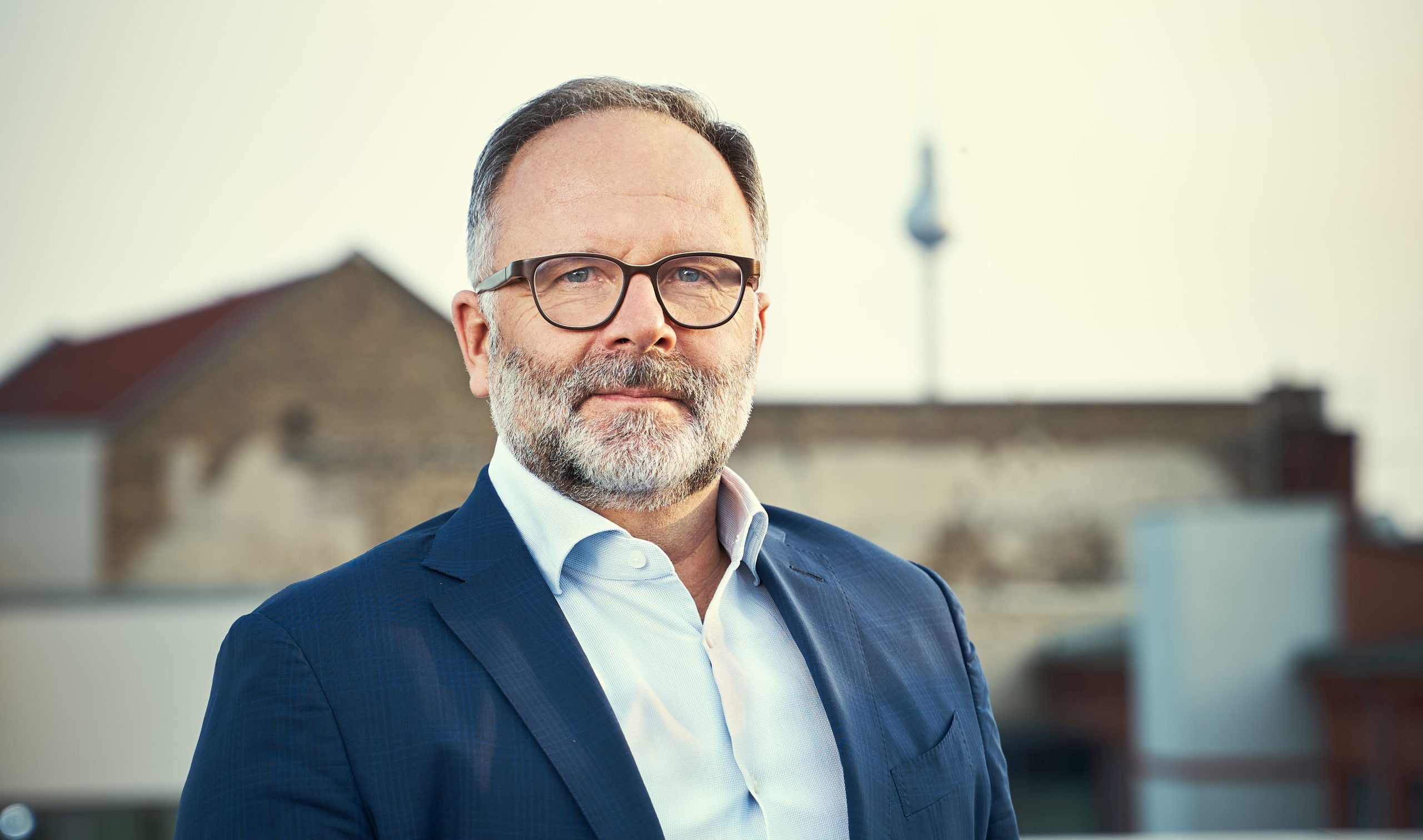
Busch-Jaeger is an established company in the building technology market and offers tradespeople, electrical wholesalers and the housing industry a comprehensive portfolio ranging from a complete range of electrical installations to electronic products for smart homes and smart buildings. Adalbert M. Neumann, CEO of Busch-Jaeger and board member of the Smart Living business initiative, explains in an interview what megatrends he sees for the industry in SmartLivingNEXT.
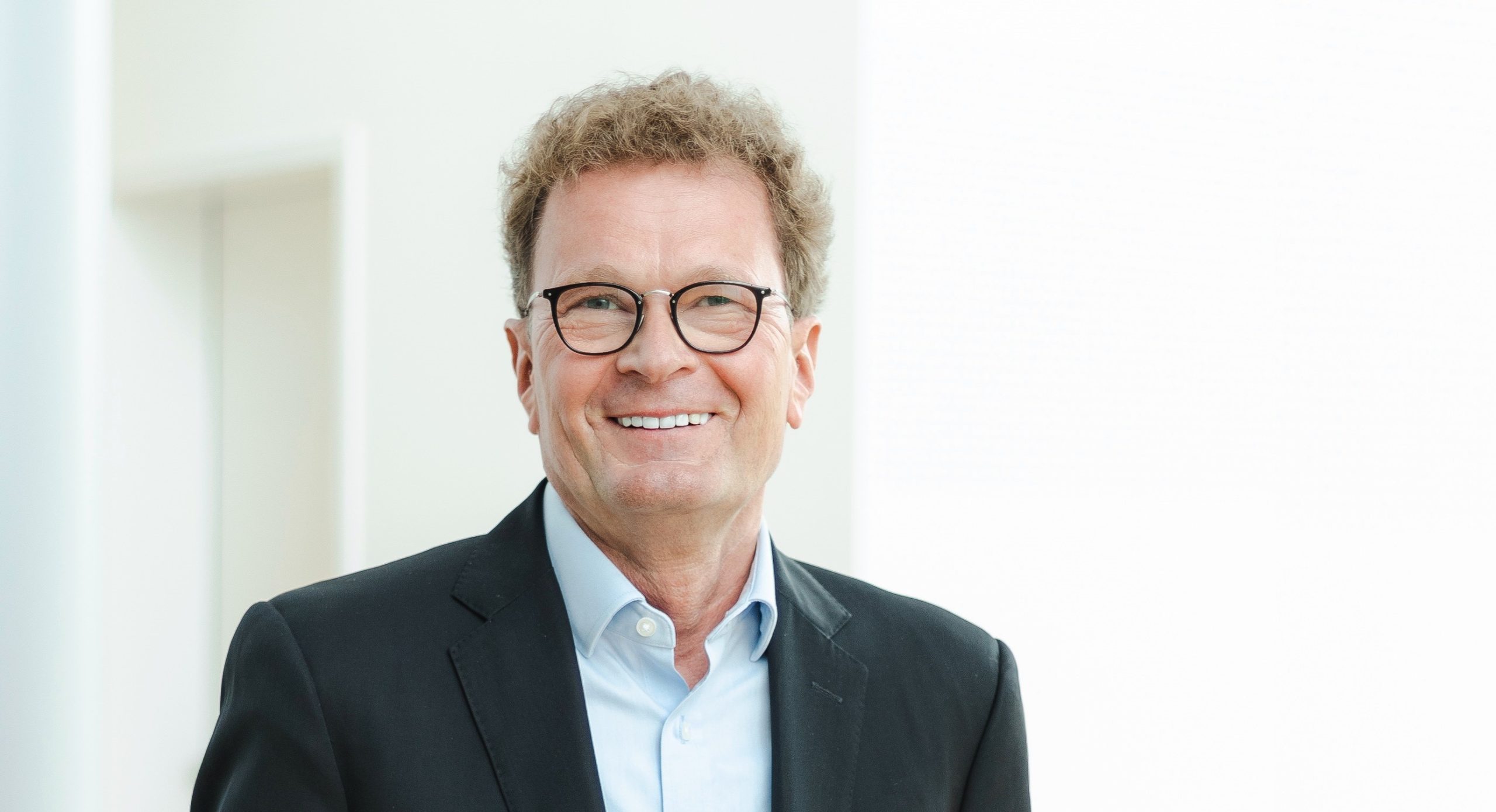
Mr Neumann, where does the Smart Living business initiative currently see the megatrends in the digitalization of buildings?
The current trend is towards comprehensive digitalization across applications that operate either in the building alone or at the interface between the building and the building environment.
This requires the opportunity for interoperability between the various applications in order to ensure communication and interaction.
What strategies should be pursued to meet these megatrends?
The aim must be to achieve simple interaction by creating the simplest possible interfaces between the applications, as has already been achieved on smartphones across different applications, for example.
Semantic programming approaches offer a good starting point here.
In the SmartLivingNEXT research project, we assume that the general usability of building data will become increasingly important within the industry and beyond.
How does the Smart Living business initiative see this?
The WISL takes a similar view.
Care should be taken here not to aim for a centralized solution, but to enable access to individual data pools, which can then be used interoperably.
On the one hand, this increases data security and, on the other, the data provided by the customer remains in the companies that have been authorized by the customer to do so.
Back to your company.
As with ForeSight, Busch-Jaeger is an associated partner of SmartLivingNEXT.
What was the deciding factor in joining again?
As the market leader for professional smart home solutions, we see the possibilities of digitalization, artificial intelligence and interaction in open ecosystems for shaping a sustainable future.
Technology dynamics and regulatory frameworks go hand in hand here, which is why we are happy to be an associated partner of SmartLivingNEXT.
At the end of the project, the technology for the SmartLivingNEXT data room will be fully developed.
In your opinion, what conditions need to be met for your industry to be motivated to actually take up this technology and implement it in sustainable business models?
In addition to the technology, it plays a major role whether business models and user acceptance are achieved.
Smart living companies will only use the developed technology if it is also economically viable.
Mr. Neumann, thank you for the interview!
Listen to the article (in German)
Editorial office:
Ilka
Klein
Category:
Flagship project
SmartLivingNEXT

Central documents for SmartLivingNEXT
The white paper contains the guideline and reference framework for the future technical development of the SmartLivingNEXT Dataspace and the desired governance structure. It was created with the collaboration of teams from German Research Center for Artificial Intelligence (DFKI), the Research Association for Electrical Engineering at ZVEI e.V., Ludwig-Maximilians-Universität München (LMU) and Materna Information & Communications SE. You can have the white paper sent to you as a PDF. Please contact our project office at projektbuero@smartlivingnext.de.
The document is intended as a structuring investor perspective and orientation framework, not as a final business plan, and analyzes the possible roles of potential investors. It was written in collaboration with Michael Schidlack, Research Association for Electrical Engineering at ZVEI e.V., Dr. Rahild Neuburger, Ludwig-Maximilians-Universität München (LMU) and Lars Thomsen, future matters AG. You can have the document sent to you as a PDF. Please contact our project office at projektbuero@smartlivingnext.de.
Das Dokument erläutert im ersten Teil (Governance & Organisation) SmartLivingNEXT als föderiertes Datenökosystem und beschreibt die Rollen, Verantwortlichkeiten und Entscheidungslogiken. Der zweite Teil (technische Architektur & Datenraum) beschreibt, wie diese Governance technisch umgesetzt wird. Es entstand unter Mitwirkung von Michael Schidlack, Forschungsvereinigung Elektrotechnik beim ZVEI e.V., Dr. Rahild Neuburger, Ludwig-Maximilians-Universität München (LMU) und Fanni Vespermann, Materna Information & Communications SE. Sie können sich das Dokument als PDF zusenden lassen. Please contact our project office at projektbuero@smartlivingnext.de.