“In the future, AI will be a key technology in building technology to control complex systems autonomously and efficiently.”
2. October 2024
Reading time:
3 minutes
Hager has been developing sustainable products and solutions for building systems technology for over 65 years and currently employs 13,000 people. We talk to Johannes Hauck, Corporate Affairs Director, about digitalization in the smart living sector and the motivation for participating in SmartLivingNEXT.
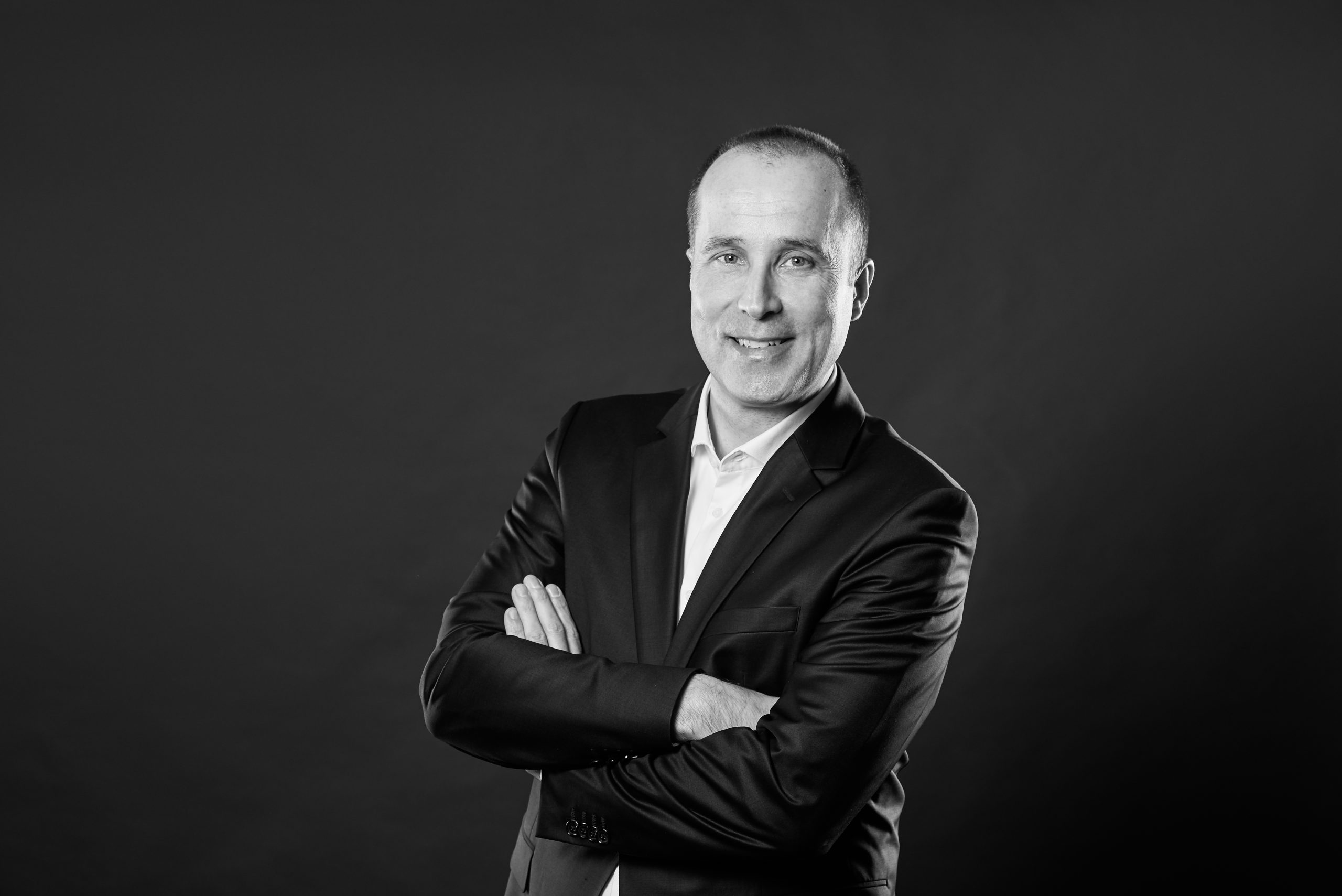
Mr. Hauck, as with ForeSight, your company is now also an associated partner of SmartLivingNEXT.
Both projects are about the future of living.
What does this future mean for your company and how do you envision future living in Germany?
Future living will be based more than ever on digitalization that interlinks different applications.
For example, optimal heating control will not only require data from smart thermostats, but also information about individual occupants in the building and their needs.
In future, building-internal applications will also make greater use of information external to the building, such as automatically shifting the wake-up time if travel times change in the morning.
Where do you see opportunities and possibilities to achieve these goals – primarily in the digitalization of buildings – in Germany?
As the diffusion of smart living applications continues, residents’ demand for ever more advanced applications will increase.
We are very familiar with this effect from smartphone development.
The aim must be to build platforms that meet these needs.
The SmartLivingNEXT funding program has set itself the goal of making it easier to establish new services for buildings in the future.
Which digital services do you think are particularly interesting here?
The following digital services are of particular interest as part of the SmartLivingNEXT funding program:
- Energy and resource management: AI-supported systems optimize energy consumption and reduce costs.
- Security solutions: Smart monitoring and access systems offer more security and control.
- Predictive maintenance: Predictive maintenance reduces downtimes and maintenance costs through early fault detection.
- Smart home automation: intelligent control of lighting, heating and appliances for greater convenience.
- Health and comfort functions: Adjustment of indoor climate and air quality for optimum well-being.
These services increase efficiency, safety and quality of life in buildings.
What role do you see artificial intelligence (AI) playing in future building technology solutions?
Artificial intelligence (AI) is playing an increasingly important role in building technology and will play a key role in developing more efficient, sustainable and intelligent solutions in the future.
By using AI, buildings can be managed and optimized automatically, whether in terms of energy consumption, air conditioning, security or maintenance.
AI-based systems continuously learn from data and can make predictions to enable predictive maintenance and reduce operating costs.
AI can also help to improve the user experience in buildings, for example by individually adjusting lighting, temperature and ventilation.
In the future, AI will be a key technology in building technology to control complex systems autonomously and efficiently.
This will offer both ecological and economic benefits by conserving resources and reducing operating costs.
Mr. Hauck, thank you for the interview!
Listen to the article (in German)
Editorial office:
Ilka
Klein
Category:
Flagship project
SmartLivingNEXT

Central documents for SmartLivingNEXT
The white paper contains the guideline and reference framework for the future technical development of the SmartLivingNEXT Dataspace and the desired governance structure. It was created with the collaboration of teams from German Research Center for Artificial Intelligence (DFKI), the Research Association for Electrical Engineering at ZVEI e.V., Ludwig-Maximilians-Universität München (LMU) and Materna Information & Communications SE. You can have the white paper sent to you as a PDF. Please contact our project office at projektbuero@smartlivingnext.de.
The document is intended as a structuring investor perspective and orientation framework, not as a final business plan, and analyzes the possible roles of potential investors. It was written in collaboration with Michael Schidlack, Research Association for Electrical Engineering at ZVEI e.V., Dr. Rahild Neuburger, Ludwig-Maximilians-Universität München (LMU) and Lars Thomsen, future matters AG. You can have the document sent to you as a PDF. Please contact our project office at projektbuero@smartlivingnext.de.
Das Dokument erläutert im ersten Teil (Governance & Organisation) SmartLivingNEXT als föderiertes Datenökosystem und beschreibt die Rollen, Verantwortlichkeiten und Entscheidungslogiken. Der zweite Teil (technische Architektur & Datenraum) beschreibt, wie diese Governance technisch umgesetzt wird. Es entstand unter Mitwirkung von Michael Schidlack, Forschungsvereinigung Elektrotechnik beim ZVEI e.V., Dr. Rahild Neuburger, Ludwig-Maximilians-Universität München (LMU) und Fanni Vespermann, Materna Information & Communications SE. Sie können sich das Dokument als PDF zusenden lassen. Please contact our project office at projektbuero@smartlivingnext.de.