“The end of stupidity”
3. February 2026
8 minutes
Energy, buildings, mobility and digital assistance systems are facing a common turning point: for the first time, previously separate technological worlds are merging into a learning, networked living environment. In this interview, we talk to Lars Thomsen, founder and Chief Futurist of future matters AG and a leading global futurologist, who explains precisely this interplay: buildings as active digital hubs, data spaces as a new social infrastructure and artificial intelligence (AI) that not only makes everyday life more technical, but also more human. His perspectives show why SmartLivingNEXT is more than just a technology project: it is a strategic approach to sovereign, networked smart living in Europe that is oriented towards the common good.
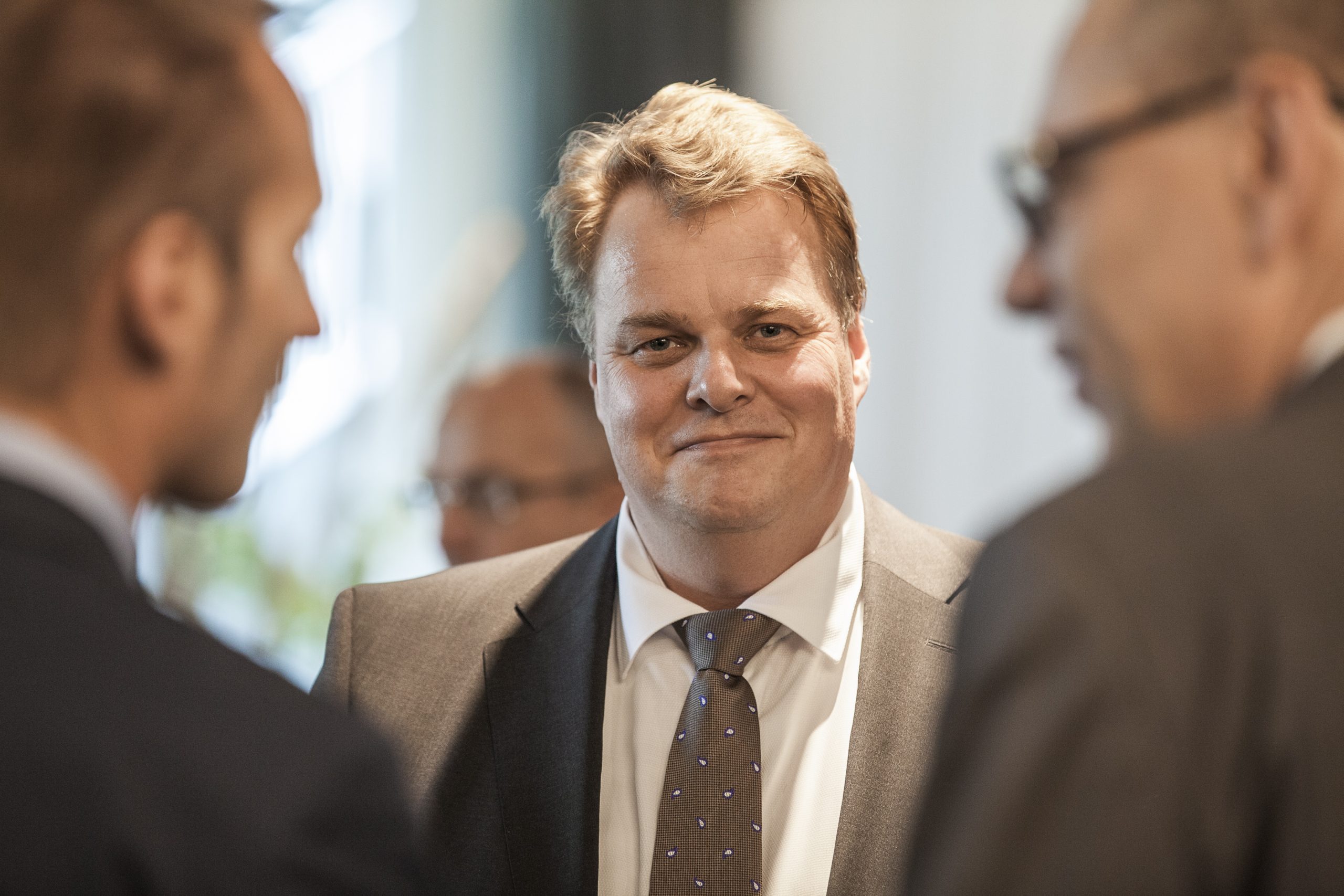
Mr. Thomsen, what does an everyday life look like in which energy, buildings, mobility and assistance systems no longer appear as separate worlds, but work together as a single, learning system?
We are at a major turning point for several industries: For the first time, energy, mobility, buildings and digital assistance systems can act as a common, learning environment that relieves and supports everyone and thinks ahead and in the background. What previously existed in separate technical silos is growing together into an organic infrastructure that is intuitive, reliable and self-optimizing. I like to refer to this transition as the “end of stupidity” because technologies are finally acquiring the ability to recognize patterns, improve themselves and take responsibility in the interests of people – similar to what we expect from a smart, i.e. competent and empathetic person.
When these systems are connected securely and intelligently, an environment is created that constantly learns and adapts to the needs of its inhabitants. The complex management of technologies fades into the background, while everyday life becomes more human, easier and carefree. Decisions become simpler, routines smarter, energy is used more efficiently, safety and comfort increase – and we regain time and freedom. It is precisely this interplay that forms the basis for what I believe SmartLivingNEXT makes possible: a smart living environment that serves and benefits people and society and is not more technical, but more human.
What new value creation models will emerge when buildings are no longer just places, but active digital hubs in networked life?
As soon as buildings and homes are no longer thought of as static places, but as active, digital hubs, their role changes fundamentally. They become participants in a networked economy that controls energy flows, coordinates services, integrates mobility, exchanges data and thus opens up completely new benefits, convenience and value-generating services. A building that understands how people live, which energy patterns arise, which mobility needs are relevant and which health or assistance requirements exist, is transformed from an object into a partner.
Value is then no longer created by square metres or location, but by context intelligence: the building’s ability to relieve and optimize, offer personal services and at the same time feed data spaces that can be used in a sovereign, secure and socially meaningful way. This creates new business models for operators, local authorities and companies that develop services, assistance functions or data-based applications. The building of the future is therefore neither a mere cost factor to be managed nor a static asset, but a learning system that becomes productive for residents and providers alike. SmartLivingNEXT creates precisely the infrastructure to make this development possible.
Fast forward ten years: what role do data rooms play as infrastructure?
In ten years’ time, data spaces will have the same importance as electricity or transport networks do today, but with one crucial addition: they will form the semantic layer that enables business and everyday life to communicate with each other in the first place. Data rooms act as a common operating system for people, operators, municipalities and secure AI in Europe. They create standardized, sovereign, trustworthy communication and exchange structures that overcome technical fragmentation and enable AI systems not only to recognize patterns, but also to understand relationships.
Without such a non-discriminatory semantic foundation that is accessible to all, the full benefits of data and AI will always remain a patchwork quilt. With it, an open, innovative and self-determined market will emerge. For this reason, I see data spaces as one of the most crucial infrastructures of the coming decade.
Which technological trend do you think will trigger the biggest leap?
The big leap will come from the convergence of two developments: AI systems that understand context and can learn and think semantically, and decentralized infrastructures that make local decisions. When these two forces merge, buildings, homes, vehicles and energy systems will be transformed into autonomous, learning organisms that act in real time and improve themselves. This development will change our everyday lives and our productivity more than any wave of innovation in recent decades. It creates an environment that is not experienced as more digital, but more intuitive and more human.
AI for the common good as a European alternative: why is this important for smart living?
Smart living can only work if it is based on trust – not the market power of hyperscalers. When buildings, energy and mobility interact with each other, people need to be sure that technology represents their interests and does not just serve a platform, a corporation or a proprietary ecosystem of a commercial global AI player. Europe has the opportunity to develop a globally visible new model here: AI that is transparent, sovereign, explainable and embedded in societal values. AI for the common good creates a technological foundation that promotes local cooperation instead of global dependency, safeguards data sovereignty and personal rights and strengthens local and national value creation. But this is not a moral project, it is a strategic one. A model that fits Europe’s culture, values and economic interests. For a networked living environment such as smart living, this type of AI is not an option, but a prerequisite.
What strategic decisions should European companies make now?
European companies should be aware that the coming years will not be linear. Rather, there will be numerous trend breaks, disruptions in technologies and business models, but also enormous opportunities for those who understand these changes faster than the others. Energy, mobility, buildings and services are converging into a single market defined by data spaces, AI and edge intelligence. The companies that are now starting to develop into these new networked ecosystems will set the standards that others will have to follow.
It is crucial to learn quickly, experiment boldly and consistently expand your own horizons in the direction of networking. The future belongs to those organizations that see themselves as part of a learning system. Successful organizations will not be those that wait until markets consolidate, but those that become context-capable early on and understand how buildings, energy, mobility, data and services merge with one another. The most important decision is therefore: don’t hesitate, shape it. Those who do not actively help define the context today will lose their relevance tomorrow in a market that will be characterized more by interoperability than by individual products.
Listen to the article (in German):
Editorial office:
Ilka
Klein
Category:
SmartLivingNEXT