SmartLivingNEXT: Market study reveals opportunities and challenges for German companies
3. March 2025
Reading time:
2 minutes
How can German companies participate in the growing smart living market – and what challenges stand in their way? The new market study by Technopolis, published as part of the accompanying research for SmartLivingNEXT, analyzes the global market development of smart living applications and evaluates the competitive position of German companies.
Key findings of the study
1. fragmentation & interoperability inhibit the market – The market is still in the development phase and is highly fragmented. Many smart living solutions are isolated solutions and therefore not compatible with each other. Networked, holistic systems are becoming increasingly important and are considered forward-looking. The message is: instead of individual Smart Living applications, the market is developing towards comprehensive ecosystems.
2. strong competition – market leaders such as Amazon and Google dominate key areas such as voice assistants and are increasingly pushing into platforms, making it difficult for European providers to establish themselves.
3. opportunities for German companies & the skilled trades: Demographic change, data protection and climate protection in particular are driving the demand for smart living solutions for social challenges. German companies must strategically position themselves in these areas with data protection-compliant, open and cross-application solutions. At the same time, new high-margin business models are opening up for trade businesses, provided they invest in digital skills and new technologies.
Conclusion: Those who rely on open standards, sustainable solutions and innovative business models can hold their own in this dynamic market. However, targeted investments and a stronger European positioning are required.
This is precisely where SmartLivingNEXT comes in: the SmartLivingNEXT Dataspace enables cross-application networking. SmartLivingNEXT also addresses the fragmentation of the market and the high competitive pressure from large providers by creating a data space that makes it easier for SMEs and start-ups to access the smart living market and promotes interoperable solutions. Companies can develop their own smart living services that work seamlessly with other applications. Practical tests within the use cases allow new technologies to be tested directly under real conditions in order to improve their market readiness.
You can find the entire study here.
Listen to the article (in German)
Editorial office:
Anita
Walcher
Category:
SmartLivingNEXT
Copyright information
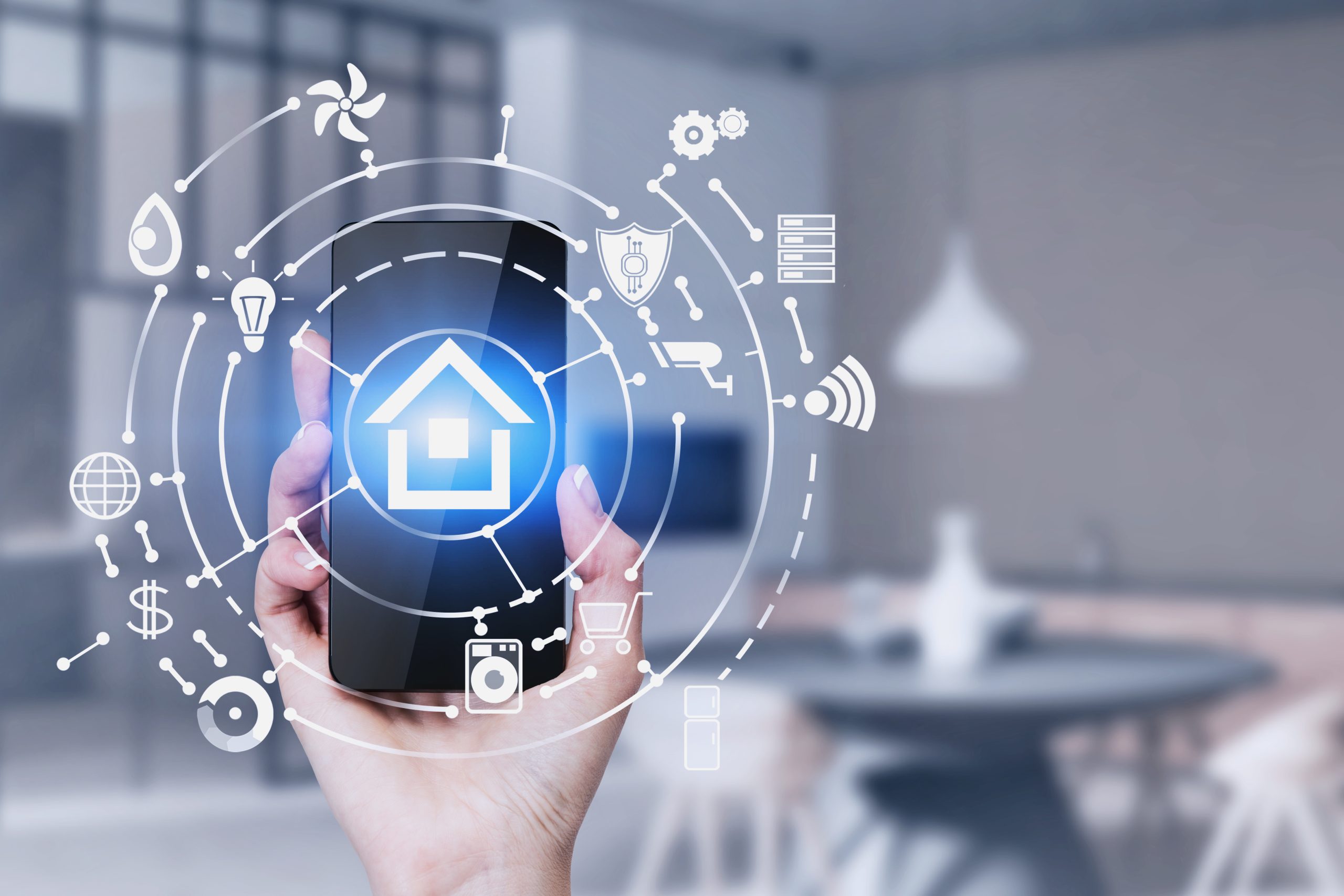
© ImageFlow via stock-adobe.com

Central documents for SmartLivingNEXT
The white paper contains the guideline and reference framework for the future technical development of the SmartLivingNEXT Dataspace and the desired governance structure. It was created with the collaboration of teams from German Research Center for Artificial Intelligence (DFKI), the Research Association for Electrical Engineering at ZVEI e.V., Ludwig-Maximilians-Universität München (LMU) and Materna Information & Communications SE. You can have the white paper sent to you as a PDF. Please contact our project office at projektbuero@smartlivingnext.de.
The document is intended as a structuring investor perspective and orientation framework, not as a final business plan, and analyzes the possible roles of potential investors. It was written in collaboration with Michael Schidlack, Research Association for Electrical Engineering at ZVEI e.V., Dr. Rahild Neuburger, Ludwig-Maximilians-Universität München (LMU) and Lars Thomsen, future matters AG. You can have the document sent to you as a PDF. Please contact our project office at projektbuero@smartlivingnext.de.
Das Dokument erläutert im ersten Teil (Governance & Organisation) SmartLivingNEXT als föderiertes Datenökosystem und beschreibt die Rollen, Verantwortlichkeiten und Entscheidungslogiken. Der zweite Teil (technische Architektur & Datenraum) beschreibt, wie diese Governance technisch umgesetzt wird. Es entstand unter Mitwirkung von Michael Schidlack, Forschungsvereinigung Elektrotechnik beim ZVEI e.V., Dr. Rahild Neuburger, Ludwig-Maximilians-Universität München (LMU) und Fanni Vespermann, Materna Information & Communications SE. Sie können sich das Dokument als PDF zusenden lassen. Please contact our project office at projektbuero@smartlivingnext.de.