SmartLivingNEXT workshop: “Saarland community project”
18. June 2024
Reading time:
3 minutes
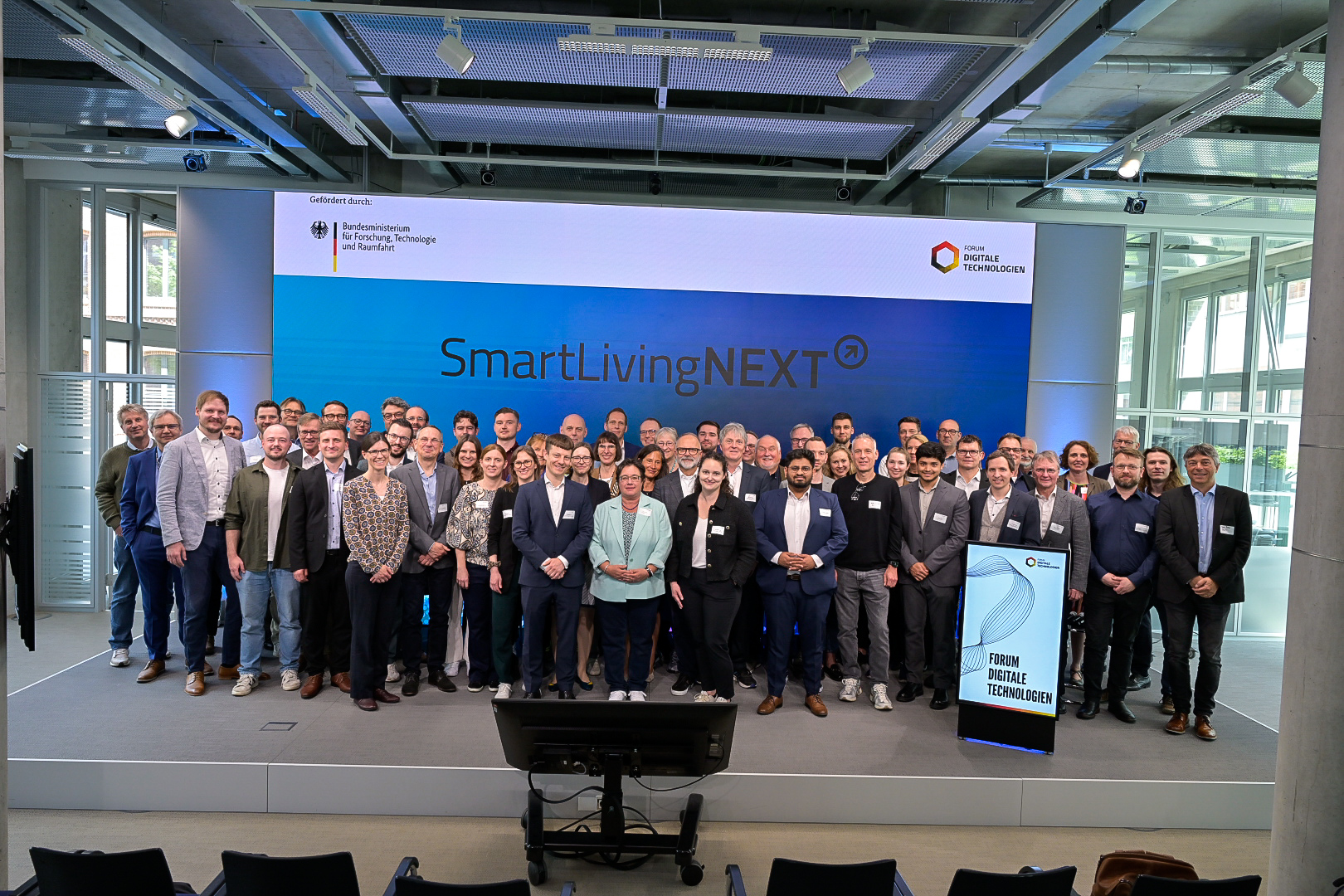
On Monday, June 10, 2024, a workshop was held on the premises of the German Research Center for Artificial Intelligence (DFKI) and DudoPark Saarbrücken. The aim: to discuss smart living solutions for Saarland that can be implemented as part of SmartLivingNEXT.
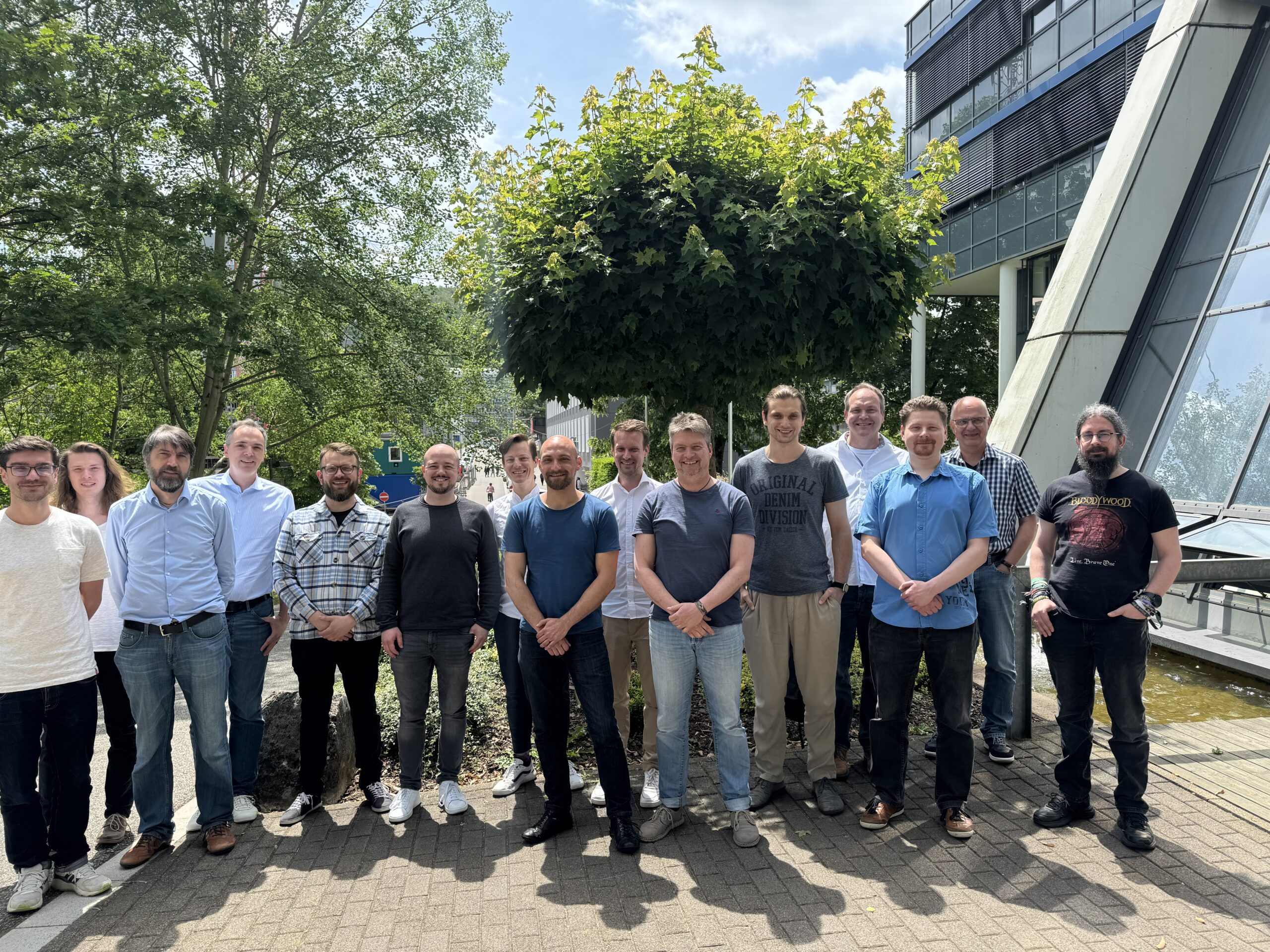
Employees from six organizations were represented – Materna, Stadtwerke Saarbrücken (SWSB), German Research Center for Artificial Intelligence (DFKI), DudoPark, Gesellschaft für Innovation und Unternehmensförderung (GIU) and Hager. At the beginning of the workshop, the SmartLivingNEXT dataspace was presented as a national access point for smart living data collected in the technology program, a federated catalog and software modules currently under development (mobile app, web portal). The vision for the community project in Saarland was also discussed. In this context, the SWSB presented planned trial areas in Saarland and informed the participants about planned regional activities, both within SmartLivingNEXT and beyond.
The workshop pursued important objectives, including the presentation of a schedule for the development of the Saarland community project, coordination and role definition, coordination of the storyline and the definition of specific joint use cases. Against this background, several questions were discussed. Where do data rooms already play a role in energy-related business models? What technical hurdles could data rooms overcome in a smart living ecosystem? Where could workshop participants help to optimize or open up new business models?
Vision for a networked, innovative Saarland
The all-day event, which also served as an opportunity to get to know each other and network, concluded with a tour of the planned DudoPark premises. This quarter in Saarbrücken-Dudweiler, which covers around 5,000 square meters and has 15 buildings, is a living and working space and serves as a creative development site for innovative ideas. As part of SmartLivingNEXT, sensors and intelligent measuring systems are to be installed there for the implementation of heat protection and assistance scenarios. “The workshop was a great opportunity to shape our vision for a networked, innovative Saarland together. By working closely together and sharing our diverse expertise, we create the basis for exciting, forward-looking projects. I am looking forward to working with such a committed and competent team on the implementation of our common goals,” summarized Alexander Löffler from SWSB, who had invited us to this meeting.
Listen to the article (in German)
Editorial office:
Maximilian
Metzner
Category:
Flagship project
SmartLivingNEXT

Central documents for SmartLivingNEXT
The white paper contains the guideline and reference framework for the future technical development of the SmartLivingNEXT Dataspace and the desired governance structure. It was created with the collaboration of teams from German Research Center for Artificial Intelligence (DFKI), the Research Association for Electrical Engineering at ZVEI e.V., Ludwig-Maximilians-Universität München (LMU) and Materna Information & Communications SE. You can have the white paper sent to you as a PDF. Please contact our project office at projektbuero@smartlivingnext.de.
The document is intended as a structuring investor perspective and orientation framework, not as a final business plan, and analyzes the possible roles of potential investors. It was written in collaboration with Michael Schidlack, Research Association for Electrical Engineering at ZVEI e.V., Dr. Rahild Neuburger, Ludwig-Maximilians-Universität München (LMU) and Lars Thomsen, future matters AG. You can have the document sent to you as a PDF. Please contact our project office at projektbuero@smartlivingnext.de.
Das Dokument erläutert im ersten Teil (Governance & Organisation) SmartLivingNEXT als föderiertes Datenökosystem und beschreibt die Rollen, Verantwortlichkeiten und Entscheidungslogiken. Der zweite Teil (technische Architektur & Datenraum) beschreibt, wie diese Governance technisch umgesetzt wird. Es entstand unter Mitwirkung von Michael Schidlack, Forschungsvereinigung Elektrotechnik beim ZVEI e.V., Dr. Rahild Neuburger, Ludwig-Maximilians-Universität München (LMU) und Fanni Vespermann, Materna Information & Communications SE. Sie können sich das Dokument als PDF zusenden lassen. Please contact our project office at projektbuero@smartlivingnext.de.